Alps hiking trips: best 3, 5 & 7 day itineraries (2026 guide)

When people start looking into alps hiking trips, they usually fall into the same trap.
They go down a rabbit hole of routes, distances, regions, and suddenly what started as “let’s do something cool this summer” turns into a full-blown research project.
The reality is much simpler.
You don’t need to find every route in the Alps. You just need the right one for your time, your fitness, and how you want the experience to feel.
Because whether you’ve got 3 days or a full week, the Alps deliver the same core thing. Big landscapes, proper movement, and that rare feeling of doing something that actually sticks with you.
This guide breaks down the best alps hiking trips by duration, so you can stop researching and start planning something you’ll book.
Matterhorn highlights Alps hiking trip (4 days)

If you want an Alps hiking trip that feels iconic from the very first step, the Matterhorn region delivers.
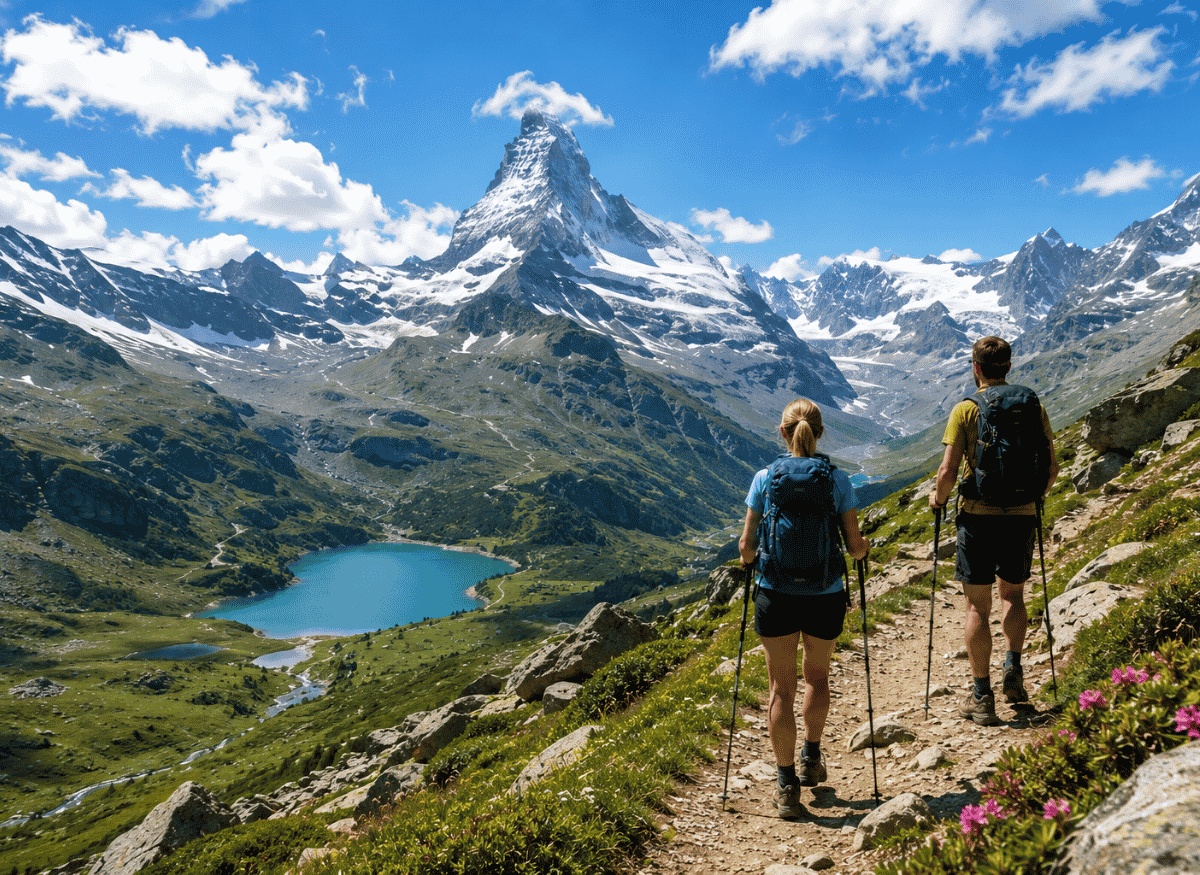
Built around the presence of the Matterhorn, this 4-day itinerary gives you constant exposure to one of the most recognisable peaks in the world. It’s not just something you see once and tick off. It follows you through the route, appearing from different angles, dominating the skyline in a way that makes every section of the trail feel slightly more dramatic.
The experience here is focused. You’re not filling time between highlights, you’re moving through them continuously. Each day brings a mix of steady climbs, technical-feeling descents and high alpine terrain that feels a little more rugged than other parts of the Alps.
Because it’s a shorter trip, the pacing works in your favour. You arrive fresh, you push yourself just enough, and you leave before fatigue really builds. That balance is what makes 4-day alps hiking tours so effective.
In terms of difficulty, this sits at around 5.5 out of 10. You’ll need a good level of fitness and be comfortable with elevation, but there’s nothing technical or extreme about it.
The best time to go is between late June and early September, when the trails are clear and conditions are stable. July and August give you the best weather, while the edges of the season offer slightly quieter trails.
Tour du Mont Blanc highlights itinerary (4 days)

The Tour du Mont Blanc is often seen as the ultimate multi-day trek, but the full route takes over a week.
The smarter version is the highlights itinerary.
This 4-day route takes the best sections of a traditional mont blanc hiking tour and removes the longer, less memorable transitions. What you’re left with is a condensed experience that delivers the views, the atmosphere and the progression people care about.
The terrain here is slightly more forgiving than the Matterhorn region. Trails are smoother, climbs are more gradual, and the overall experience feels more accessible while still being properly rewarding.
That makes it one of the best entry points into alps hiking trips, especially if it’s your first multi-day trek.
In terms of difficulty, this comes in at around 5 out of 10. You’ll still be covering distance and elevation each day, but it’s designed to be achievable without feeling overwhelming.
The best time to go is again late June to early September, with July and August offering the most reliable weather. If you want slightly fewer people on the trails, early September is a strong option.
👉 Tour du Mont Blanc highlights trip
Mini Haute alps hiking route (5 days)
Five-day alps hiking trips are where things start to feel more immersive.
You’re no longer dipping into the mountains, you’re moving through them.
The Mini Haute Route is a perfect example of that shift. It’s a condensed version of a much longer alpine crossing, linking valleys, climbing over high passes and gradually building a sense of progression that shorter trips can’t fully deliver.
By the second or third day, something changes. Your body adapts, your pace settles, and the experience becomes less about effort and more about flow. You stop thinking about how far you’ve got to go and start noticing what’s around you.
This is also where the landscape variety really shows up. Glaciers, ridgelines, alpine lakes, each day feels distinct rather than repetitive.
In terms of difficulty, this sits at around 6 out of 10. Not because of technical terrain, but because of duration. Five consecutive days of hiking builds fatigue, and that’s where the challenge comes in.
The best time to go is July through early September, when higher passes are clear and conditions are more predictable. Earlier in the season, snow can still affect some sections.
Mont Blanc summit itinerary (7 days)
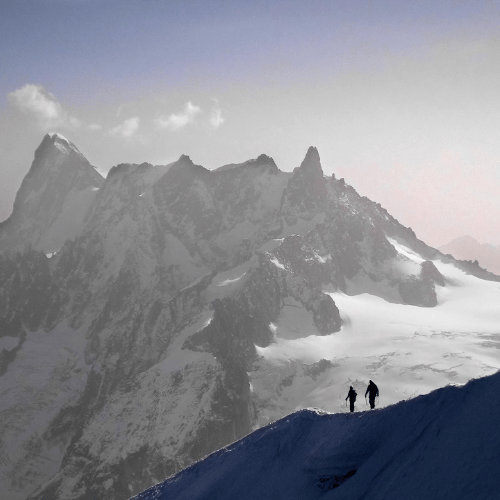
If you’ve got the time and you want something that goes beyond a typical trekking experience, this is where alps hiking trips become something else entirely.
This isn’t just about walking through the mountains. It’s about reaching the highest point in Western Europe.
A 7-day Mont Blanc summit itinerary blends trekking with mountaineering, taking you from valley trails into high alpine terrain where the landscape shifts dramatically. Early in the trip, you’re building rhythm and adapting to elevation. By the later stages, you’re moving across glaciers, navigating exposed ridgelines, and working towards a summit that genuinely feels earned.
There’s a clear progression to the week. The first few days are about preparation, both physically and mentally. You’re gaining altitude, adjusting to thinner air, and building confidence in more technical terrain. Then the focus sharpens. Everything leads towards summit day.
And summit day is exactly what you’d expect. Early start, colder conditions, and a steady, focused push upwards. It’s not rushed, it’s not chaotic, it’s controlled, consistent effort. The kind where every step matters a bit more than the last.
What sets this apart from other alps hiking tours is the mental shift. You’re not just covering distance, you’re working towards a single objective. That changes how the whole trip feels. There’s more intent, more focus, and a stronger sense of achievement at the end.
In terms of difficulty, this sits at around 8.5 out of 10. It’s significantly more demanding than a standard trekking route. Not just because of the elevation and duration, but because of the technical elements involved. Crampons, ice axes and guided support become part of the experience here.
The best time to go is typically June through September, with July and August offering the most stable summit conditions. Outside of that window, weather and snow conditions can become far less predictable.
For those looking for something more than a standard mont blanc hiking tour, this is the next level.
Choosing between Alps hiking trips (3, 5 or 7 days)
Choosing between different hiking trips isn’t about picking the “best” one. It’s about picking the one that fits your life.
If you’re tight on time or want a high-impact experience without the fatigue, a 4-day trip is ideal. You’ll see the best parts and leave wanting more, which isn’t a bad outcome.
If you want something more immersive, where the rhythm of hiking becomes part of the experience, 5 days is often the sweet spot.
And if you’ve got the time, energy and appetite for a bigger challenge, 7 days gives you the full story. More depth, more variation, and a stronger sense of progression.
All of them fall under what people are really searching for when they look at summer holidays in the Alps.
Not just a break, but something that feels worthwhile.
FAQs
What are the best Alps hiking trips for beginners?
If you’re new to multi-day hiking, shorter alps hiking trips like 3–4 day itineraries are the best place to start. Routes such as the Tour du Mont Blanc highlights offer incredible scenery with manageable distances and elevation, making them ideal for building confidence.
How difficult are Alps hiking tours?
Alps hiking tours vary in difficulty depending on the route and duration. Shorter trips typically range from 5–6 out of 10, while longer itineraries or summit experiences like Mont Blanc can reach 8–9 out of 10. Most routes don’t require technical climbing skills, but fitness and endurance are important.
When is the best time to book summer holidays in the Alps for hiking?
The best time for summer holidays in the Alps is between late June and early September. During this period, trails are clear, mountain huts are open, and weather conditions are generally more stable. July and August offer the most reliable conditions, while early September is slightly quieter.
Do I need a guide for Alps hiking trips?
You can complete many Alps hiking trips, thanks to well-marked trails. However, guided Alps hiking tours remove the stress of planning, accommodation and navigation, allowing you to focus entirely on the experience.
What should I pack for Alps hiking trips?
Packing should focus on lightweight essentials. Layered clothing, a waterproof jacket, comfortable hiking boots and a well-fitted backpack are key. The goal is to stay prepared without carrying unnecessary weight over multiple days.
Related
More reading



.webp)
.webp)

.webp)

.webp)
.webp)