Tour du Mont Blanc guide: routes, stages, costs & tips
Introduction to the Tour du Mont Blanc Highlights hike
At some point, the idea of doing the Tour du Mont Blanc stops being a vague “one day” plan and starts feeling uncomfortably real.
You picture yourself walking through the Mont Blanc massif, crossing borders without really noticing, eating well-earned meals in mountain huts, and casually dropping into conversation that you’ve just hiked one of the most iconic routes in the world.
Then the questions start.
How hard is it, actually?
Do you need weeks off work?
Are you about to spend several days carrying things you’ll never use?
This guide is here to cut through all of that. It’s an honest look at what the Tour du Mont Blanc involves, how to prepare for it properly, and why more people are choosing a shorter, smarter version of the route without losing what makes it special.
Did we also mention that you hike through 3 countries in 4 days? 😊
Routes and stages of the full Tour du Mont Blanc
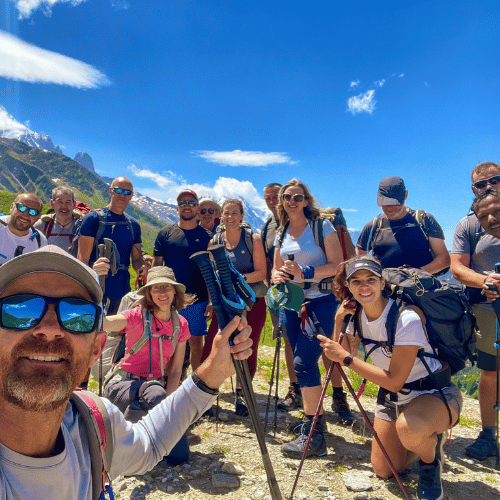
On paper, the full Tour du Mont Blanc is straightforward. A circular route of around 170 kilometres that loops through France, Italy and Switzerland, completed over the course of 7 to 11 days.
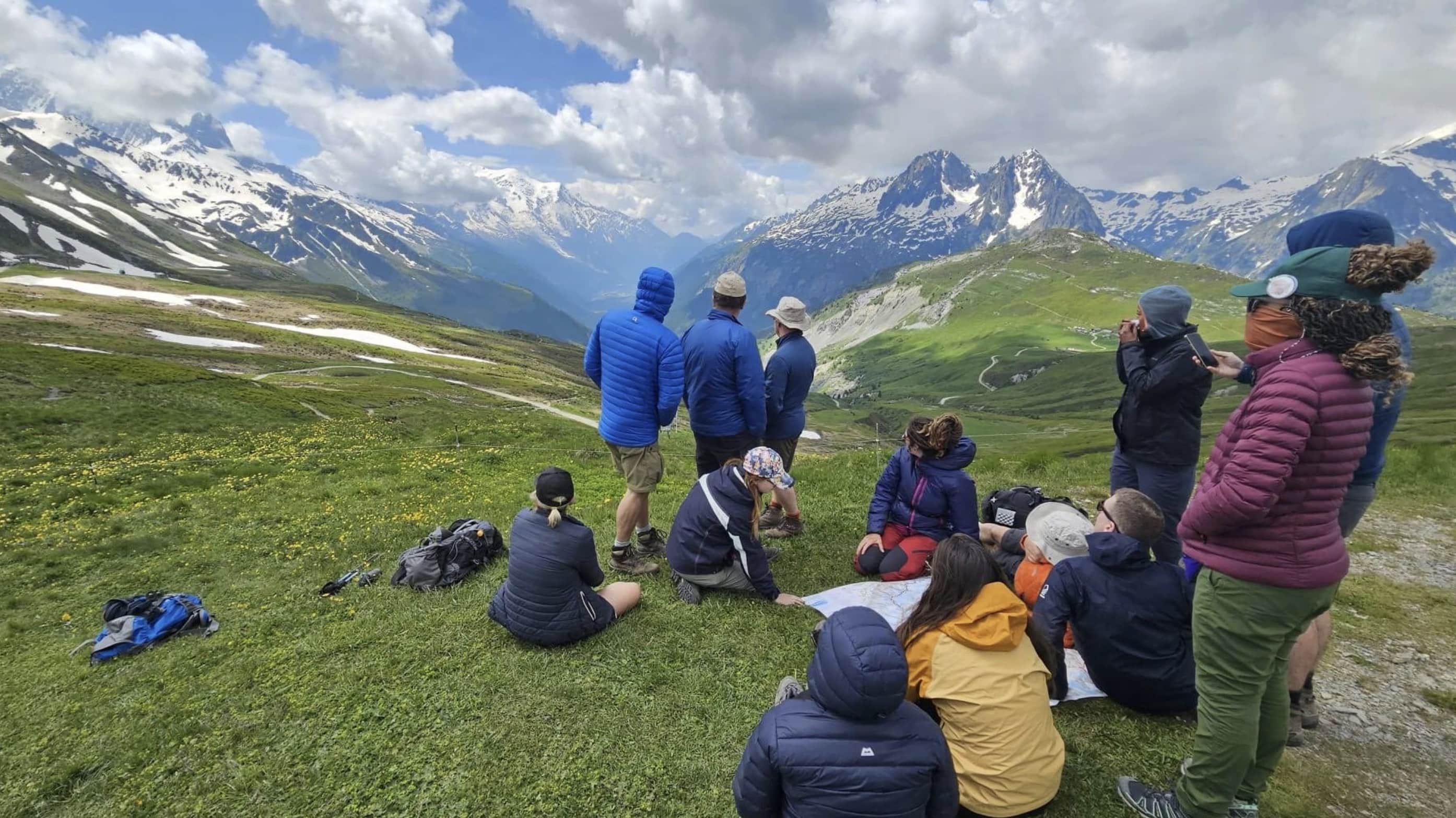
In reality, it’s far more than a number on a map. Each day brings a mix of long climbs, steady descents and constantly changing scenery that makes it feel like you’re walking through different countries, not just technically crossing them. One moment you’re on a quiet trail overlooking a valley, the next you’re hiking towards a pass with views that feel slightly ridiculous in the best possible way.
What makes the route so appealing is its balance. It’s challenging enough to feel like an achievement, but it doesn’t require specialist mountaineering skills. You don’t need ropes or ice axes, but you do need preparation, a bit of resilience and the ability to laugh when the weather decides to ignore your plans.
But, most people nowadays choose the 4-day version instead.
Why the 4-day Tour du Mont Blanc highlights experience makes more sense
There’s a quiet shift happening with the Tour du Mont Blanc.
More people are asking a simple question. Do I need to do all of it to get the best parts?
The answer, increasingly, is no.
The 4-day highlights version focuses on the most visually impressive and rewarding sections of the route. Instead of committing to over a week of continuous hiking, you experience the sections that people remember most, the dramatic ridge lines, the sweeping valleys and the kind of views that make you stop mid-step for no real reason.
What changes is the pacing. You arrive with energy, move through the mountains without the fatigue that builds over longer treks, and leave feeling like you’ve had a complete experience rather than just finished something.
For a lot of people, this is the difference between doing the Tour du Mont Blanc and enjoying it.
What it feels like day to day
One of the hardest things to explain about the Tour du Mont Blanc is how quickly you adapt to it.
The first day feels like an introduction. You’re aware of your surroundings, your pace, your bag, and whether you packed something unnecessary that is now quietly judging you from your shoulders.
By the second day, the movement becomes more natural. You settle into a rhythm, your body starts to respond, and you begin to notice things beyond the effort. The light changes across the mountains, the sounds of the trail, the small moments that don’t show up in photos.
By the final day, there’s a sense of familiarity that didn’t exist at the start. You’re still working physically, but it feels manageable, almost routine. And just as you get comfortable with it, it ends. Which is probably the right time.
How fit do you need to be for the Tour du Mont Blanc hike?
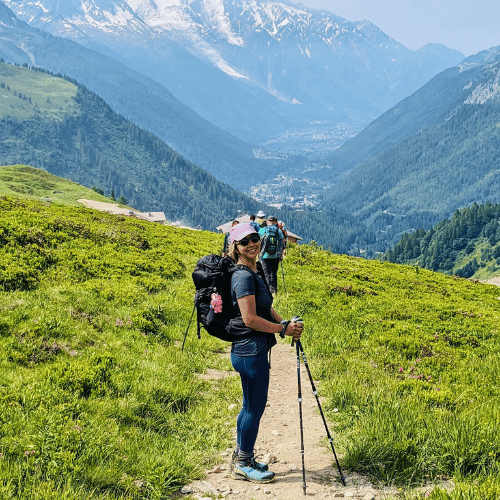
You don’t need to be exceptionally fit to complete the Tour du Mont Blanc, but you do need to be prepared for sustained effort.
The most useful form of preparation is simply walking. Long, steady walks with some elevation will do more for you than almost anything else. If you can comfortably spend several hours on your feet without needing frequent breaks, you’re in a good position.
Strength training helps, particularly for your legs and core. Movements like squats and lunges translate directly to uphill and downhill stability, which becomes increasingly important as the days go on.
What matters most is consistency. Building up gradually over a few weeks is far more effective than trying to cram preparation into the final days before your trip.
Packing for the Tour du Mont Blanc and how to keep it light
Packing for the Tour du Mont Blanc is where most people make their first mistake.
The instinct is to prepare for every possible scenario, which usually results in carrying far more than you need. The reality is that the route rewards simplicity.
A well-packed bag focuses on layers rather than volume. A couple of breathable tops, a warm mid-layer and a reliable waterproof jacket will handle most conditions you’re likely to encounter. Comfortable trousers, a few pairs of socks and properly broken-in boots are far more important than having multiple outfit options.
The key is to think in terms of function rather than variety. Each item should have a clear purpose. If it doesn’t, it probably doesn’t belong in your bag.
And if your pack feels heavy before you start, it will feel significantly heavier a few hours into your first climb.
Best time to hike the Tour du Mont Blanc
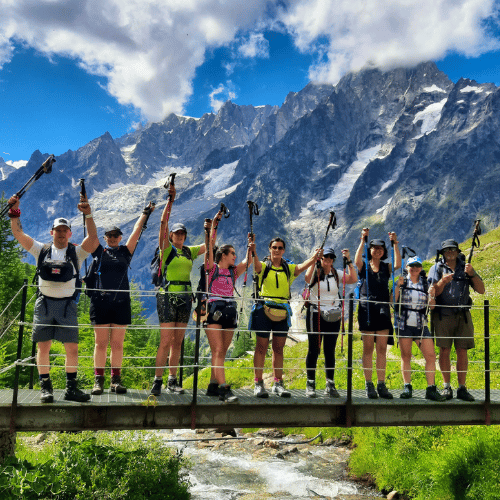
The main hiking season for the Tour du Mont Blanc runs from late June to early September.
This is when the trails are most accessible, mountain huts are open and conditions are generally stable. July and August offer the most reliable weather, but they also bring more people.
If you prefer a quieter experience, the edges of the season can be a good option. You may encounter slightly cooler conditions or occasional snow at higher points, but you’ll also find fewer crowds and a more relaxed atmosphere.
How much money will I need?
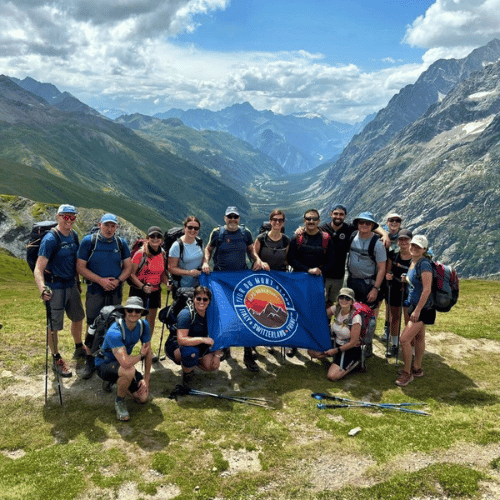
The cost of the Tour du Mont Blanc varies depending on how you approach it.
A full, self-guided trek involves multiple nights of accommodation, daily food costs and additional expenses that add up over time. While it can be done on a reasonable budget, it still requires planning and flexibility. It's also becomming increasingly difficult to arrange accommodation when not booking with a guide.
A shorter, guided experience changes that structure. By focusing on a condensed route, you reduce the number of nights, simplify logistics and gain the benefit of a planned itinerary. The overall cost may be slightly more structured, but the experience is often smoother and easier to manage. This is by far the most popular option for people looking to meet new people and have a more enjoyable time.
Common mistakes (that are very easy to avoid)
Most issues on the Tour du Mont Blanc aren’t dramatic. They’re small decisions that build up.
Packing too much is the classic one. It doesn’t feel like a problem until it really does. The same goes for footwear. Boots that aren’t properly broken in can turn a manageable day into something far less enjoyable.
Underestimating downhill sections catches people out more than expected. It’s not just about getting up the mountain. Getting down repeatedly has its own impact.
And then there’s pacing. Starting too fast feels great early on, but it rarely pays off later. Consistency beats enthusiasm here.
Is the Tour du Mont Blanc worth it?
Short answer, yes.
Longer answer, it’s one of those experiences that stays with you. Not just because of the views, although they help, but because of the rhythm of it. The simplicity of walking each day, the progression, the sense of covering real ground.
It’s challenging enough to feel like an achievement, but accessible enough that you don’t need years of experience to attempt it.
And once you’ve done it, normal walks feel slightly underwhelming. Which is both a blessing and a mild inconvenience.
Exploring beyond the Tour du Mont Blanc
If this has sparked something, it usually means one thing. You’re not stopping at one trip.
There are plenty of other routes and experiences across the Alps that offer different challenges and scenery. You can explore more options through the summer hiking trips and see what fits your next adventure.
Why book Alps Adventures for your Tour du Mont Blanc trip
There’s no shortage of ways to organise a Tour du Mont Blanc. You can piece it together yourself, follow a downloadable route, or try your luck booking huts as you go and hope everything lines up.
Or you can make it a lot easier on yourself.
At Alps Adventures, the focus is simple. Take one of the most iconic hikes in the world and remove the unnecessary friction around it. That means clear itineraries, properly thought-out routes, and support from people who actually know the mountains, not just how to market them.
We’re also a verified guide partner, trusted to deliver trips for established platforms like Skyhook Adventure, Mapo Tapo, and Explore Share. That’s not just a badge to put on a website. It means our trips meet the standards these platforms expect, from safety and logistics through to the overall experience on the ground.
What that looks like in practice is a smoother, more enjoyable trip from start to finish. Routes are designed to give you the best of the Tour du Mont Blanc without unnecessary detours. Accommodation is planned in advance, so you’re not dealing with last-minute decisions after a full day of hiking. And if conditions change, which they often do in the Alps, you’ve got experienced guides making the right calls.
There’s also something to be said for knowing what to expect each day. Not in a rigid, over-planned way, but in a way that lets you focus on the actual experience rather than constantly thinking about what comes next.
Because at the end of the day, the Tour du Mont Blanc isn’t just about completing a route. It’s about enjoying it while you’re out there.
FAQs
How difficult is the Tour du Mont Blanc?
The Tour du Mont Blanc is considered moderately challenging. You’ll be walking for several hours each day with consistent elevation gain and descent. You don’t need technical climbing skills, but a good level of fitness and endurance will make the experience far more enjoyable.
Can beginners do the Tour du Mont Blanc?
Yes, beginners can complete sections of the Tour du Mont Blanc with the right preparation. Many first-time hikers choose a shorter version, such as a 4-day highlights trip, which offers the best parts of the route without the full physical and time commitment.
How long does the Tour du Mont Blanc take?
The full route typically takes between 7 and 11 days to complete, depending on pace and itinerary. However, shorter options are available that focus on the most scenic sections, allowing you to experience the route in as little as 4 days.
What is the best time of year to hike the Tour du Mont Blanc?
The best time to hike the Tour du Mont Blanc is between late June and early September. During this period, trails are accessible, mountain huts are open, and weather conditions are generally more stable.
Do I need a guide for the Tour du Mont Blanc?
You can complete the Tour du Mont Blanc, but many hikers choose a guided experience to simplify logistics, accommodation, and route planning. A guide can also provide local knowledge and support, making the overall experience smoother and more enjoyable.
Related
More reading



.webp)
.webp)

.webp)

.webp)
.webp)