Tour du Mont Blanc guided vs self-guided: complete comparison

Tour du Mont Blanc guided vs self-guided: which is right for you?
The Tour du Mont Blanc is one of the most famous long-distance hikes in the world.
Every year, thousands of hikers head to the Alps to complete this iconic route, crossing through France, Italy and Switzerland while circling the Mont Blanc massif.
One of the biggest decisions you'll make before setting off isn't what boots to buy or how many snacks to pack. It's whether to choose a guided Tour du Mont Blanc or attempt a self-guided Tour du Mont Blanc.
Both options can be incredible. Both have advantages and disadvantages. The right choice depends on your fitness, experience, budget and how you want the trip to feel.
This guide breaks down everything you need to know before making that decision.

Tour du Mont Blanc guided vs self-guided: what's the difference?
At its core, both options follow the same trails and visit many of the same mountain passes, valleys and alpine villages.
The difference is everything that happens around the hiking itself.
A self-guided Tour du Mont Blanc means you're responsible for planning your route, booking accommodation, navigating the trail, monitoring weather conditions and dealing with any issues that arise along the way.
A guided Tour du Mont Blanc removes much of that responsibility. Routes, accommodation and logistics are organised in advance, and experienced guides help manage the day-to-day decisions.
For some hikers, planning every detail is part of the adventure. For others, it can quickly become the most stressful part of the trip.
Why choose a guided Tour du Mont Blanc?
One of the biggest advantages of a guided Tour du Mont Blanc is simplicity.
Rather than spending months researching accommodation, transport connections and route options, you can focus entirely on preparing for the hiking itself.
This becomes particularly valuable during the trek. Mountain weather can change quickly, trails occasionally need adapting and accommodation availability can be limited during peak season.
An experienced guide understands the route, knows the local conditions and can make informed decisions if plans need to change.
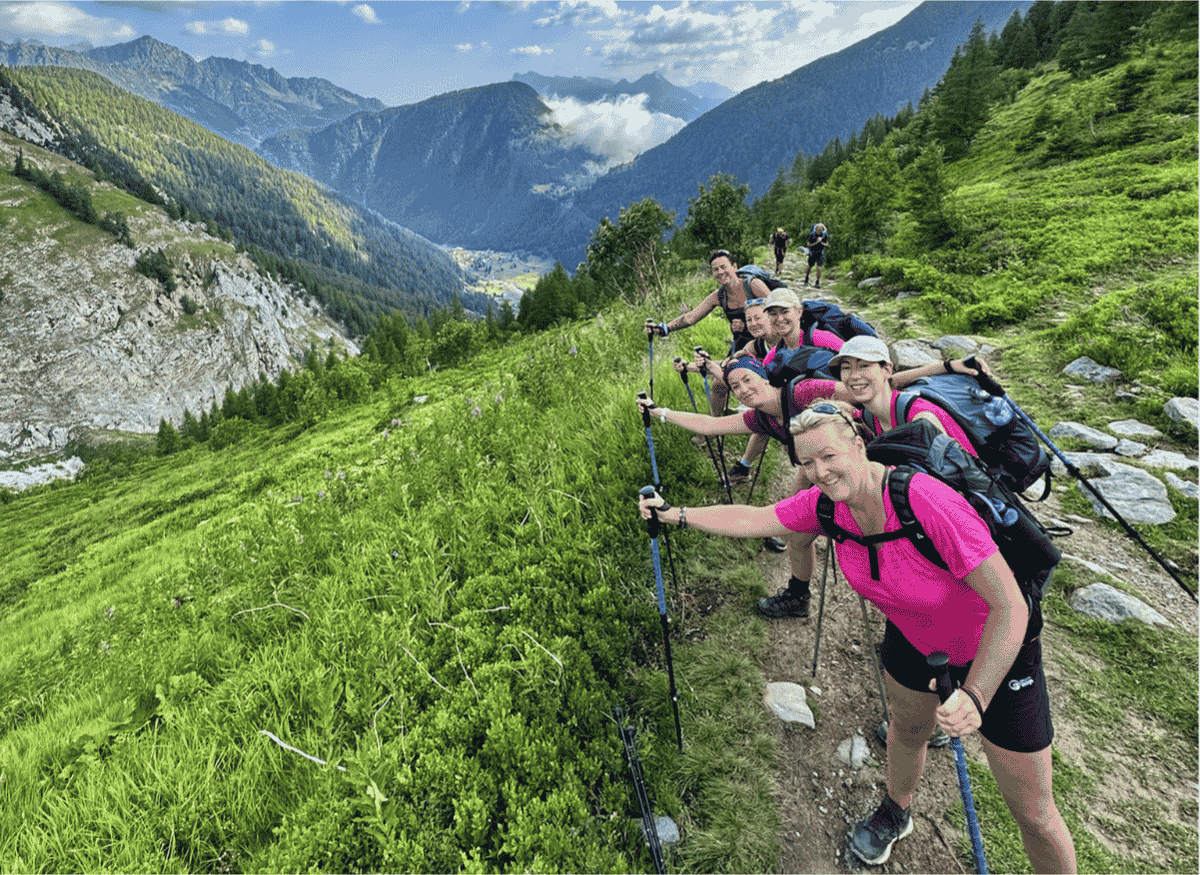
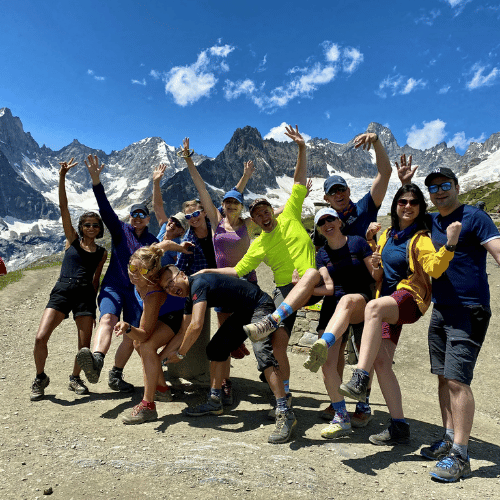
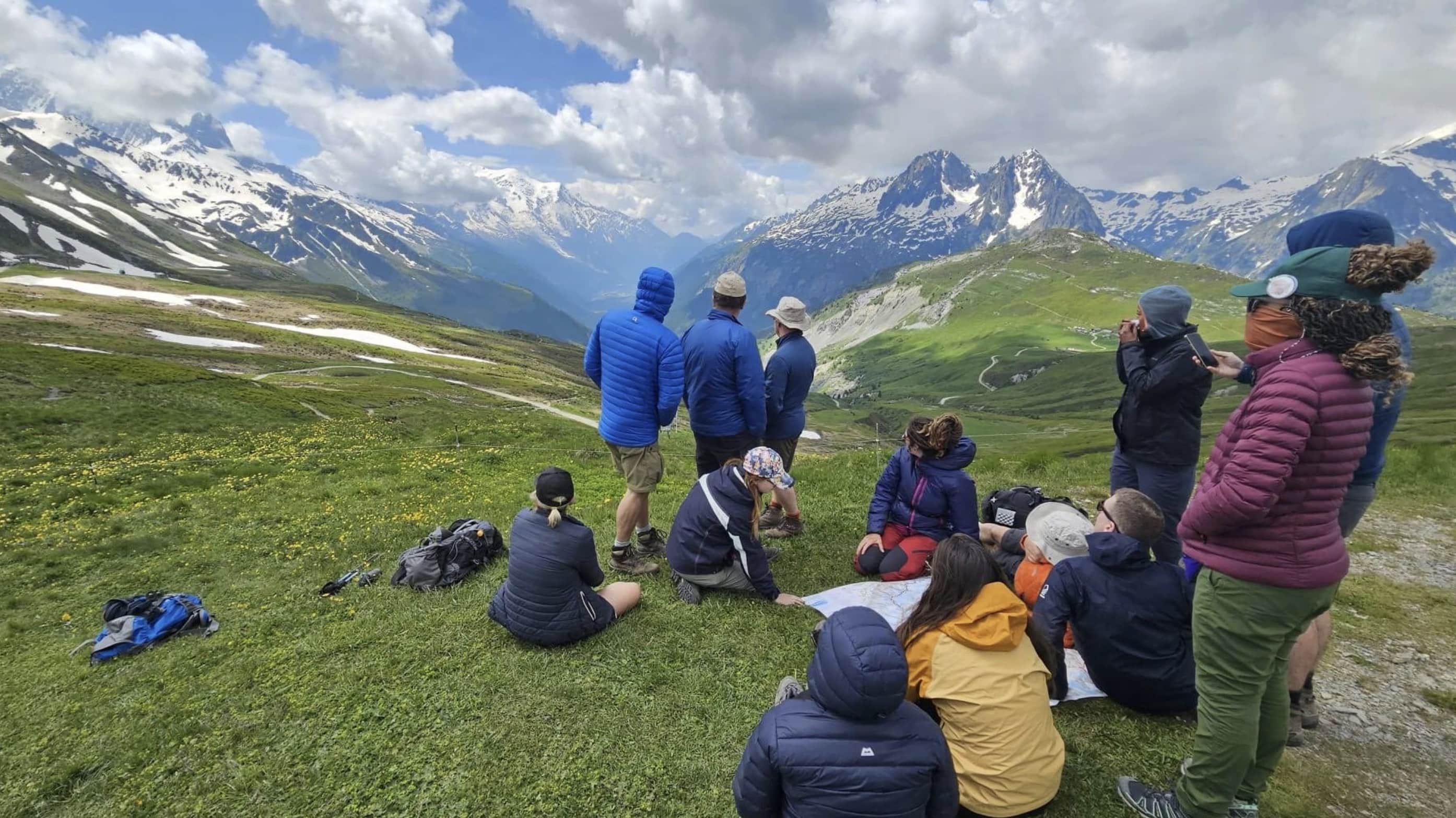
There's also a social element that many people don't consider before booking. Joining a guided trip often means hiking alongside like-minded people who share similar interests. Friendships formed on the Tour du Mont Blanc frequently last long after the trek has ended.
For first-time multi-day hikers, this support can be invaluable. Instead of worrying about maps, navigation and logistics, you can focus on enjoying the scenery and the experience itself.
Why choose a self-guided Tour du Mont Blanc?
For some people, freedom is the biggest attraction.
A self-guided Tour du Mont Blanc allows you to move entirely at your own pace. If you want to stop for an extra coffee in a mountain village, spend an hour taking photographs, or adjust your itinerary along the way, you can.
There can also be a perception that self-guided hiking is significantly cheaper. While that can sometimes be true, it's often less dramatic than people expect once accommodation, transport, meals and contingency costs are included.
Self-guided hiking tends to suit experienced walkers who are comfortable navigating independently and making decisions in changing mountain conditions.
The planning process itself can also be rewarding. Many hikers enjoy researching routes, comparing accommodation options and building an itinerary that feels uniquely theirs.
The trade-off is responsibility. If accommodation falls through, weather changes unexpectedly or transport connections don't go to plan, it's up to you to solve those challenges.
Tour du Mont Blanc guided vs self-guided: comparing costs
Cost is often one of the first factors people consider.
A self-guided Tour du Mont Blanc typically appears cheaper on the surface. You have full control over where you stay, what you eat and how you travel.
However, many hikers underestimate how quickly costs add up.
Accommodation during peak season can be expensive and availability is often limited. Booking late can leave you with fewer options and higher prices. Add meals, transport, luggage transfers, route planning and travel insurance, and the gap between guided and self-guided experiences can narrow considerably.
Guided trips usually involve a higher upfront cost, but many expenses are bundled together. Accommodation, planning, logistics and guiding services are organised in advance, making budgeting far more predictable.
The question isn't always which option is cheapest. It's which option offers the best value for the experience you're looking for.
Tour du Mont Blanc guided vs self-guided: fitness requirements
The physical demands of the Tour du Mont Blanc don't change dramatically whether you're guided or self-guided.
You'll still be walking for multiple days, often covering significant elevation gain and loss.
What does change is the mental load.
When hiking self-guided, you're constantly making decisions. Checking routes, assessing weather, monitoring timings and managing accommodation logistics all require energy.
Guided hikers can focus almost entirely on the walking itself.
For many people, this makes the route feel more enjoyable, particularly on longer or more challenging days.
Regardless of which option you choose, preparation is important. Regular walking, hill training and some strength work will help ensure you get the most from the experience.
Tour du Mont Blanc guided vs self-guided: safety considerations
The Tour du Mont Blanc is generally considered a safe route, but mountain environments always require respect.
Weather can change rapidly, visibility can deteriorate and conditions can vary significantly between valleys and mountain passes.
A guided Tour du Mont Blanc provides an extra layer of reassurance. Guides understand local conditions, monitor forecasts and can adapt plans if necessary.
This doesn't mean self-guided hiking is unsafe. Thousands of people complete the route independently every year.
However, self-guided hikers need to be comfortable making decisions in changing conditions and have confidence in their navigation skills.
If you're new to multi-day alpine hiking, this is often one of the strongest arguments for choosing a guided experience.
Tour du Mont Blanc guided vs self-guided: which experience is more enjoyable?
This is where the answer becomes personal.
Some hikers love the independence of self-guided travel. They enjoy planning routes, solving problems and having complete flexibility throughout the trip.
Others find that removing those responsibilities allows them to enjoy the mountains more fully.
A guided trip often creates more opportunities to relax, socialise and focus on the scenery. A self-guided trip can offer a stronger sense of independence and personal achievement.
Neither approach is better.
They're simply different.
The key is being honest about what you want from the experience.
Who should choose a guided Tour du Mont Blanc?
A guided Tour du Mont Blanc is often the best choice if:
- This is your first multi-day alpine trek
- You want support throughout the trip
- You'd rather focus on hiking than logistics
- You enjoy travelling with like-minded people
- You want local knowledge and expertise
For many people, a guided experience strikes the perfect balance between adventure and convenience.
You still earn every view and every climb. You just don't have to spend your evenings worrying about what happens tomorrow.
For hikers looking for a shorter, more accessible way to experience the route, our Tour du Mont Blanc highlights trip focuses on some of the most scenic sections of the trail over four unforgettable days.
Related
More reading



.webp)
.webp)

.webp)

.webp)
.webp)